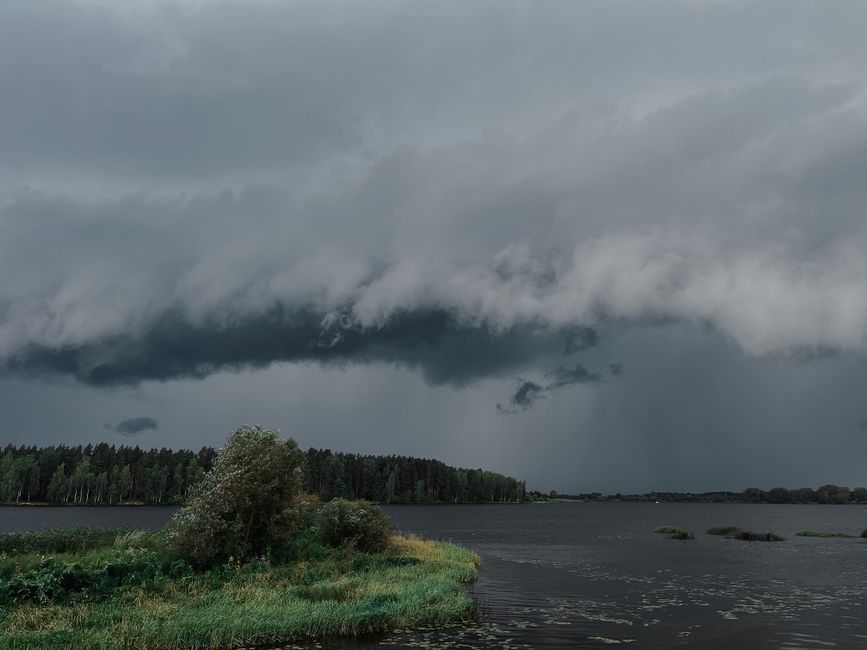
Heavy weekend rains ease drought in parts of Finland but leave Eastern regions dry
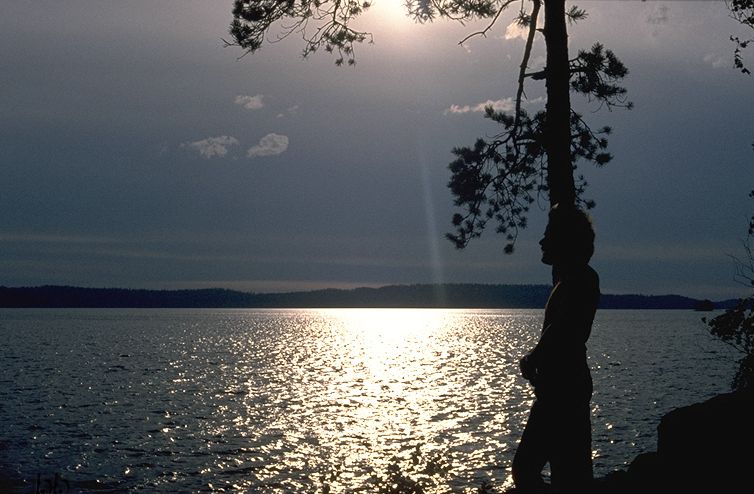
Heavy rainfall over the weekend has significantly raised water levels in lakes across large parts of Finland, bringing relief to areas suffering from prolonged drought, according to the Finnish Environment Institute (Syke). However, Eastern Finland remains dry, with lake and groundwater levels still well below average.
Syke reports that daily rainfall exceeded 100 millimetres in some areas, causing small lakes to rise by over 50 centimetres and large lakes by 20–30 centimetres. "Even for large lakes, the situation changed remarkably quickly. Summer downpours are usually quite localized, but Sunday’s rainfall covered an exceptionally wide area," said Syke researcher Harri Myllyniemi in a press release (Yle).
Regional differences in water levels
Water levels have returned to normal in many regions, including Southwest Finland, Kainuu, and parts of Central Finland. Lake Saarijärvi, which had been unusually low, has largely recovered, though nearby Lake Keitele remains below average. In Northern Pirkanmaa, Lake Tarjanne’s water level is expected to reach its typical August level following the recent rains (Iltalehti).
Despite the improvements, Eastern Finland continues to face severe drought. Lakes Päijänne, Kallavesi, and Saimaa remain significantly below their seasonal averages, with Saimaa’s water level still declining slowly. Syke states that without above-average rainfall, these levels are unlikely to improve (Yle, Iltalehti).
Groundwater concerns persist
The weekend rains have also improved soil moisture and raised small groundwater formations to normal levels in many areas. However, the effects of the rainfall may not be fully visible until next week, and regional variations remain significant (Iltalehti).
In Eastern Finland, groundwater levels remain critically low, with small formations 10–60 centimetres below summer averages. Medium and large groundwater reserves are also declining, measuring 10–70 centimetres below normal across most of the country, except in Lapland, where levels are mostly stable (Iltalehti).
Syke warns that low groundwater levels can lead to dried-up wells and deteriorating water quality, urging residents to monitor their water supply and prepare for potential shortages.